Proof from the product
Real UI snapshot used to anchor the operational workflow described in this article.
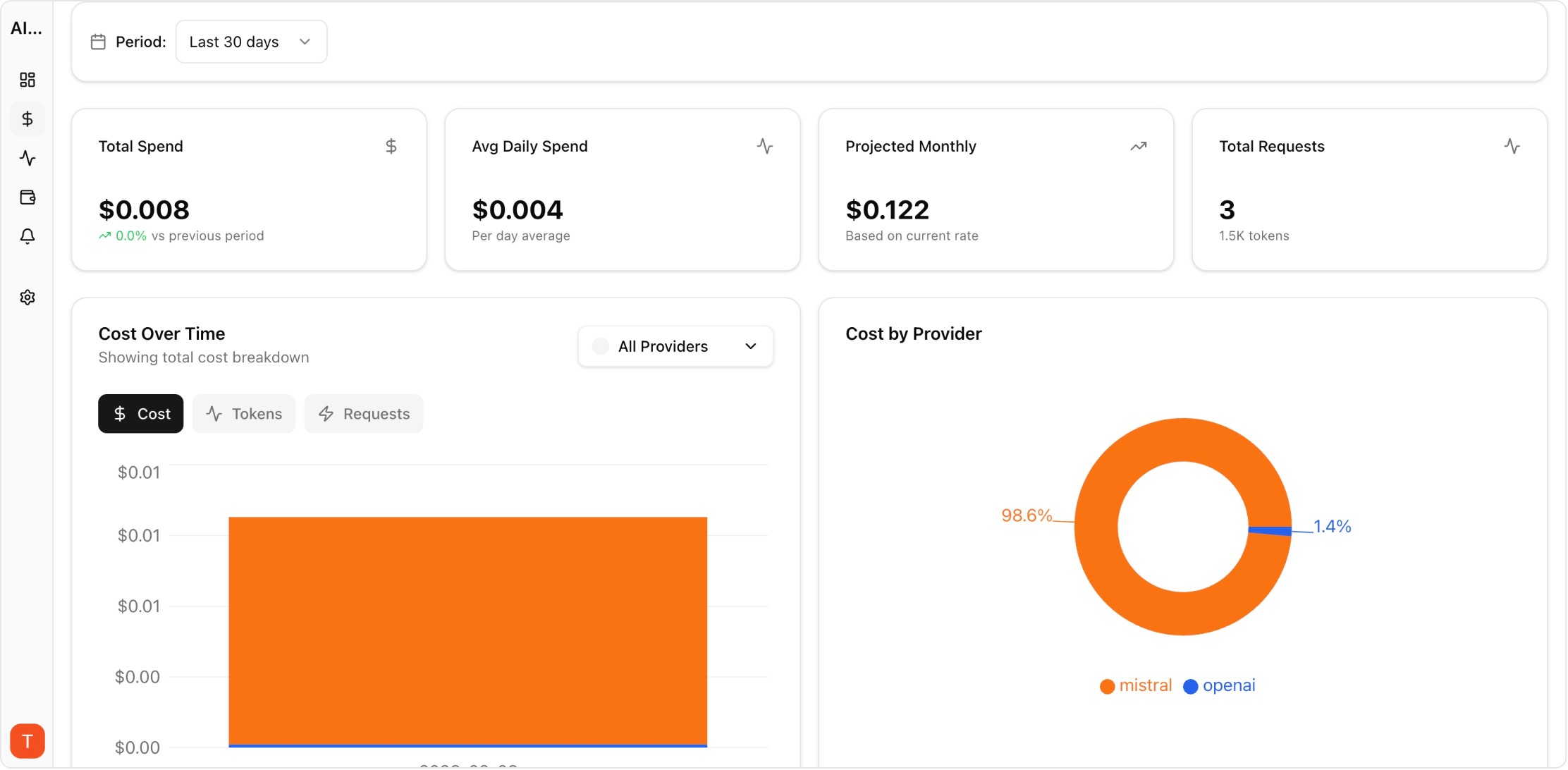
As AI adoption spreads across teams, LLM cost management transitions from an engineering problem to an organizational challenge. Without clear budgets, attribution, and governance workflows, team-level AI costs become invisible until they appear as an unpleasant surprise in monthly billing. This guide covers the frameworks, tools, and processes teams need for effective multi-team LLM cost governance.
Real UI snapshot used to anchor the operational workflow described in this article.
Individual developers and small teams optimize naturally because they see their own costs. But at 5+ teams sharing AI infrastructure, the tragedy of the commons emerges. No single team feels responsible for total spend. Without team budgets and attribution, cost optimization efforts lack accountability and cost growth goes unchecked.
Start by measuring current per-team spend for one month. Then allocate budgets based on: (1) historical usage patterns, (2) planned feature roadmap and expected AI integration, (3) model complexity requirements per team, and (4) a shared buffer for experimentation. Review and adjust budgets quarterly. AI Cost Board project workspaces enable per-team budgets with automated enforcement.
Create a workspace for each team or major project. Map API keys or request metadata to workspaces so every dollar of AI spend is attributed to an owner. This enables per-team dashboards, budget alerts, and chargeback reporting. Without workspace attribution, cost optimization conversations have no data foundation.
Prevent cost surprises from teams adopting expensive models without oversight. Implement a lightweight approval workflow: teams can freely use models within their tier (e.g., GPT-4o-mini, Haiku) but need approval to use frontier models (e.g., GPT-4o, Opus) in production. This balances developer autonomy with cost governance.
Hold bi-weekly cost review meetings with team leads. Review: per-team spend vs budget, cost trends, anomalies, and optimization opportunities. Share wins — when one team finds a cost optimization, propagate it across teams. Keep meetings to 30 minutes with a standard dashboard view. AI Cost Board reporting provides the data foundation for these reviews.
Effective governance grows with the organization. Start with visibility (dashboards), add accountability (team budgets), then add controls (approval workflows). Avoid over-governing early — the goal is cost awareness and optimization, not bureaucracy. The right governance framework makes teams feel empowered to use AI efficiently, not restricted from using it at all.
LLM Cost Optimization Guide: 11 Tactics to Reduce AI Spend Without Losing Quality
cost-optimization · framework
AI Observability Stack for SaaS Teams: What to Measure Beyond Tokens and Spend
observability · framework
AI Feature Unit Economics Framework for SaaS and Agency Teams
cost-optimization · framework
Prompt Versioning for Cost Control: Stop Silent Token Creep in Production
governance · commercial
Team-level LLM cost management is about creating shared accountability for AI spend. Start with visibility, add budgets and attribution, and build governance that scales with your organization.