Use Case

AI Copilot Cost Monitoring for Product Teams

AI copilots create sticky product experiences, but cost can rise faster than activation and retention gains. This use case tracks unit economics and reliability in one view.

Audience: Product, Engineering, Growth, Finance

What to measure

MetricWhy it matters
Cost per active userMeasure monetization fit of copilot features.
Cost per actionFind expensive prompts and workflows that hurt margins.
p95 latencyMaintain response speed for user trust and adoption.
Error rate by featureCatch regressions after prompt or model changes.

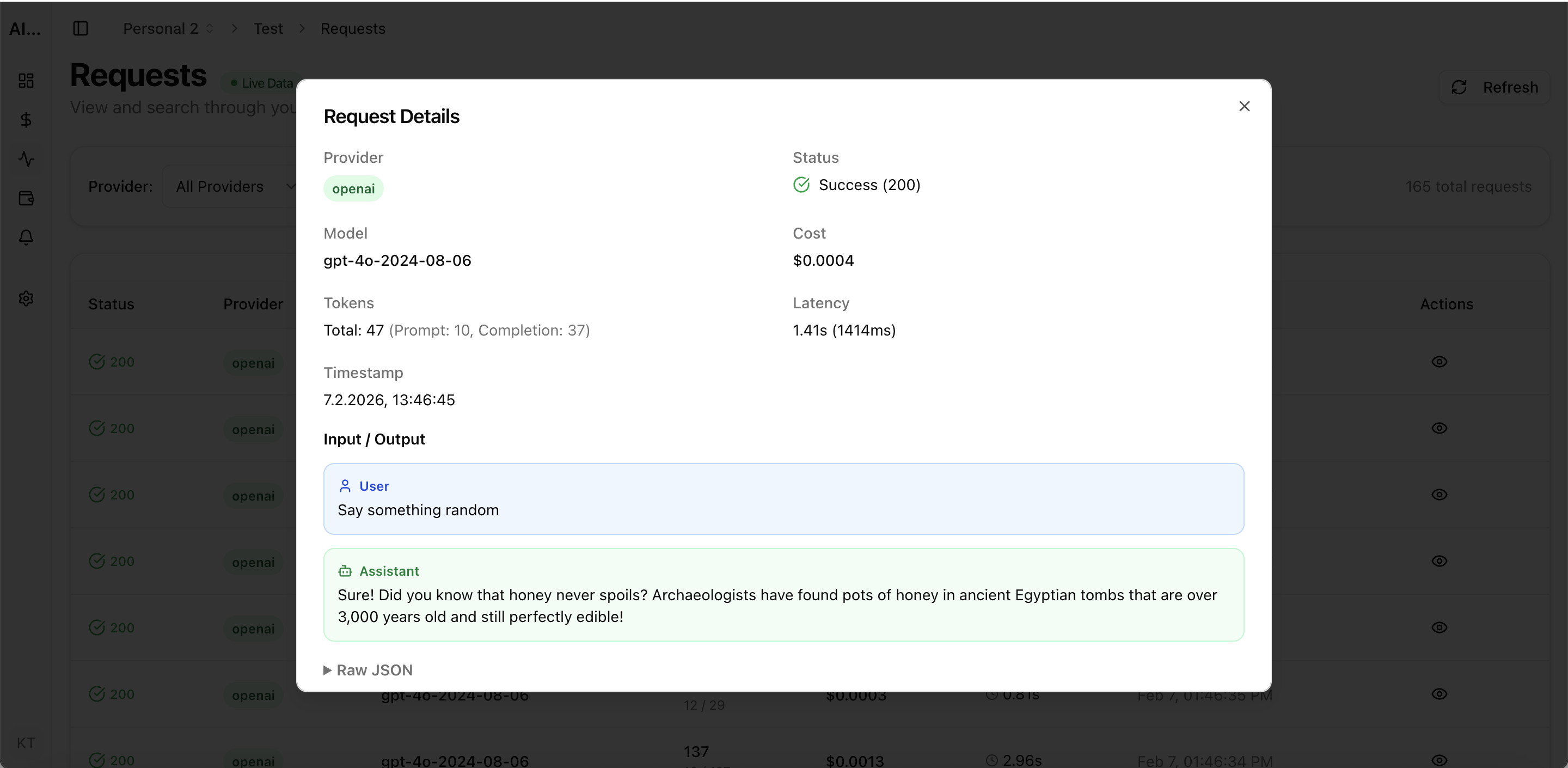
Proof from the product

Real UI snapshot from AI Cost Board used in production workflows.

AI Copilot Cost Monitoring for Product Teams proof screenshot

Real product UI used to support this operational workflow.

Implementation steps

  1. 1. Group requests by feature, endpoint, and user cohort.
  2. 2. Track usage and cost per tenant or workspace.
  3. 3. Alert on spikes in cost per action and latency.
  4. 4. Review weekly with product and engineering.

FAQ

What is the best unit metric for copilots?

Cost per active user and cost per high-value action usually give the clearest product signal.

Can this support multitenant SaaS?

Yes. Project and workspace attribution is essential for tenant-level AI cost control.

Should I track only spend?

No. Track spend together with latency, errors, and usage outcomes to avoid false optimization.