Problem
Unexpected bills usually come from missing project attribution, retry loops, prompt regressions, or traffic spikes that are only visible after the invoice closes.
Use this page to prevent runaway OpenAI API spend with monitoring, request logs, alerts, and project-level ownership.
Unexpected bills usually come from missing project attribution, retry loops, prompt regressions, or traffic spikes that are only visible after the invoice closes.
| Area | What good looks like |
|---|---|
| Problem signal | Unexpected bills usually come from missing project attribution, retry loops, prompt regressions, or traffic spikes that are only visible after the invoice closes. |
| What to measure | Requests, tokens, cost, latency, errors, and provider/model breakdowns |
| Operational proof | Request logs + dashboards + alert history + project-level attribution |
| Decision loop | Weekly review with engineering and finance owners |
Real UI snapshot from AI Cost Board used in production workflows.
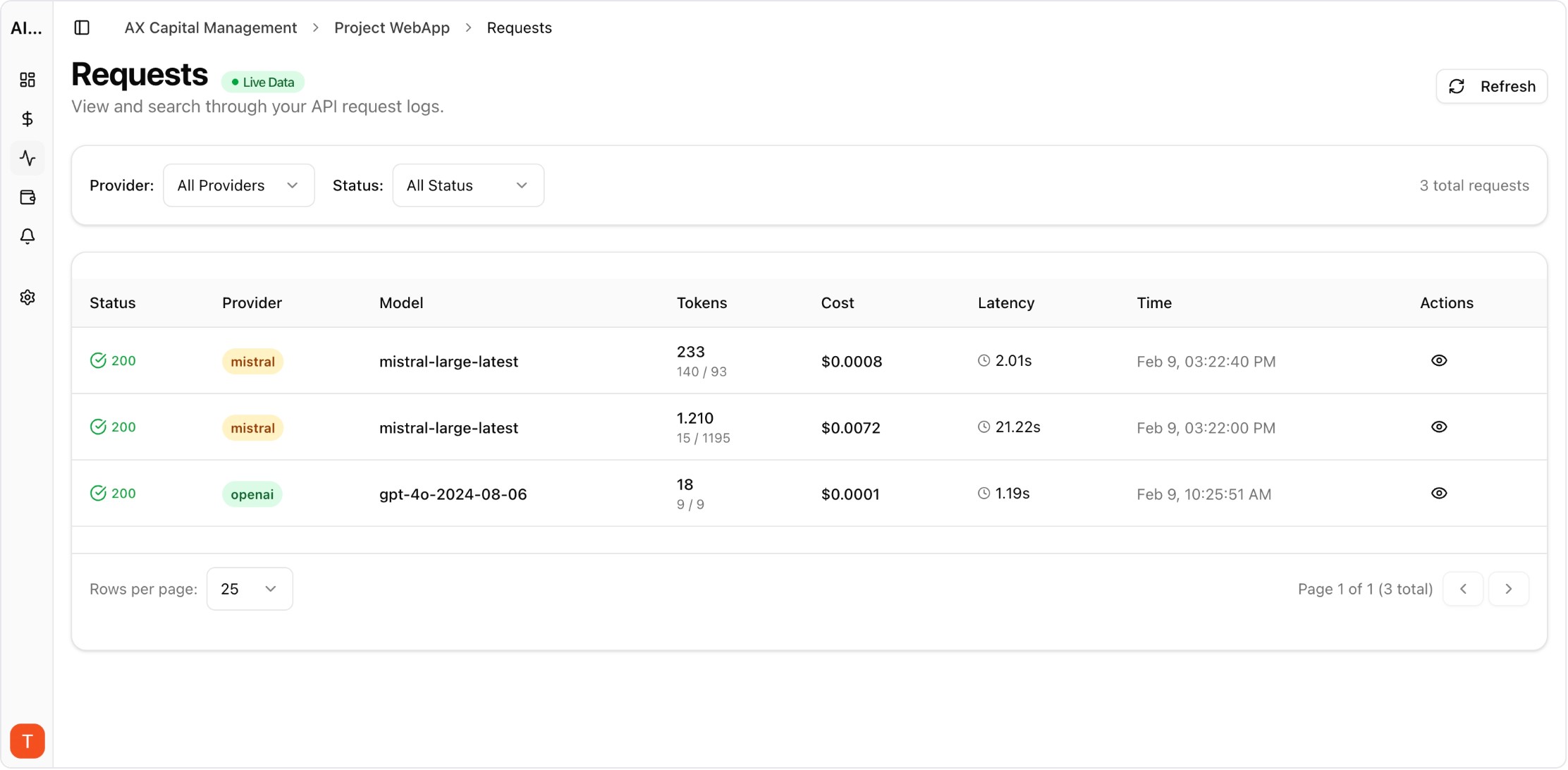
Budget and anomaly alerts help teams stop overspend before month-end surprises.
Monitor cost, tokens, usage, latency, errors, and request logs across providers in one platform.
This page is for engineering, platform, finance, and product teams evaluating AI API observability and cost-control workflows.
No. It covers cost together with usage, latency, errors, and request-level evidence so teams can make safer production decisions.
Yes. AI Cost Board combines dashboards, request logs, provider analytics, and budget controls for this use case.